The Problem
Parents of children who are deaf or hard of hearing often carry the real work of language enrichment at home — supporting listening, vocabulary, and communication beyond clinic visits. Generic parenting apps ignore hearing level, device use (aids, implants, FM), and how auditory access changes from day to day. Without a daily path tuned to their child, families get long lesson plans or vague advice — and AI tools feel disconnected from how DHH children actually learn language.
Our Approach
- 01
Mapped the system end to end — parent input → hearing profile → AI recommendations → daily actions → feedback — and mirrored it in a shared API and event model so product logic and UX stayed aligned.
- 02
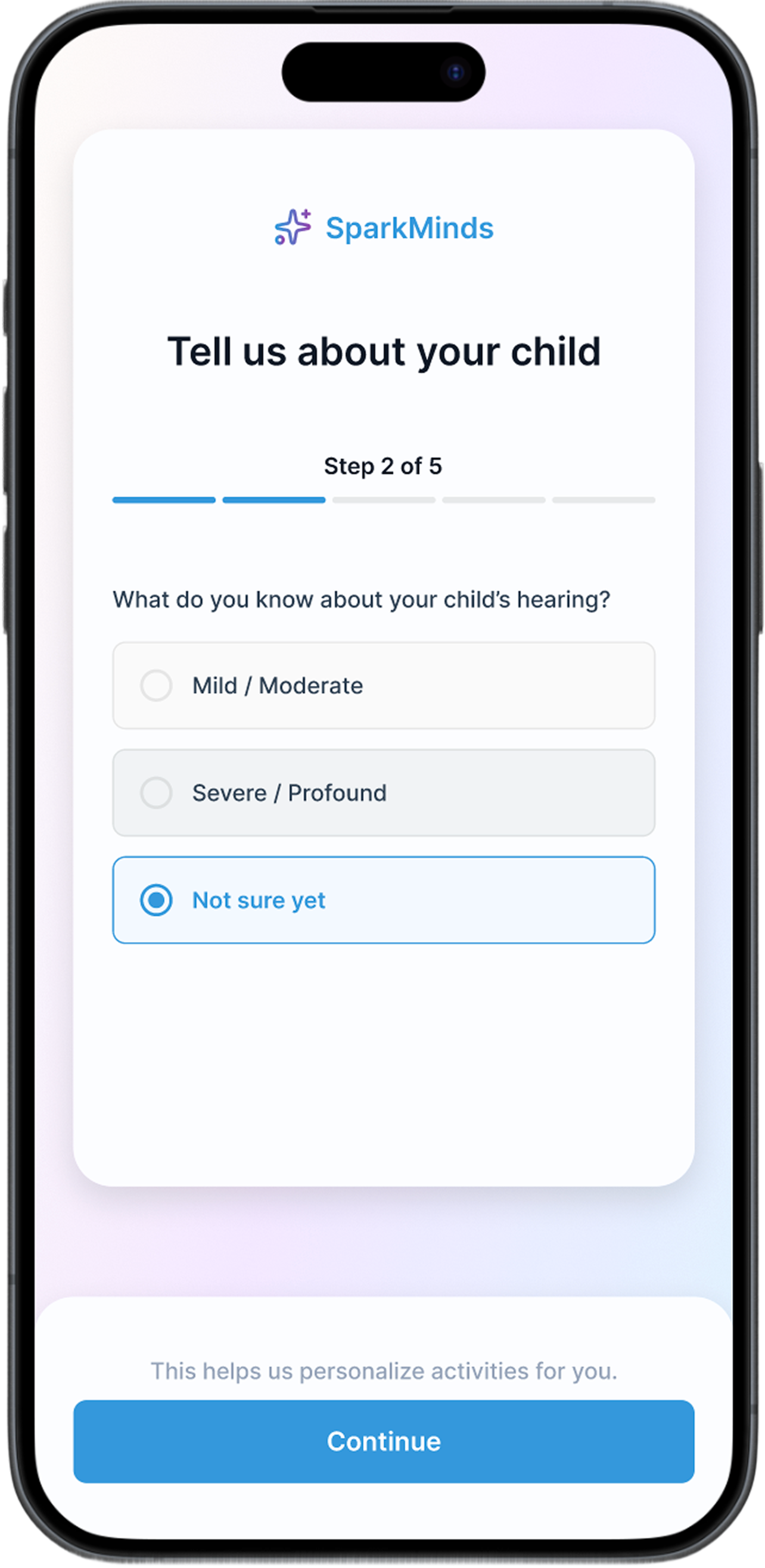
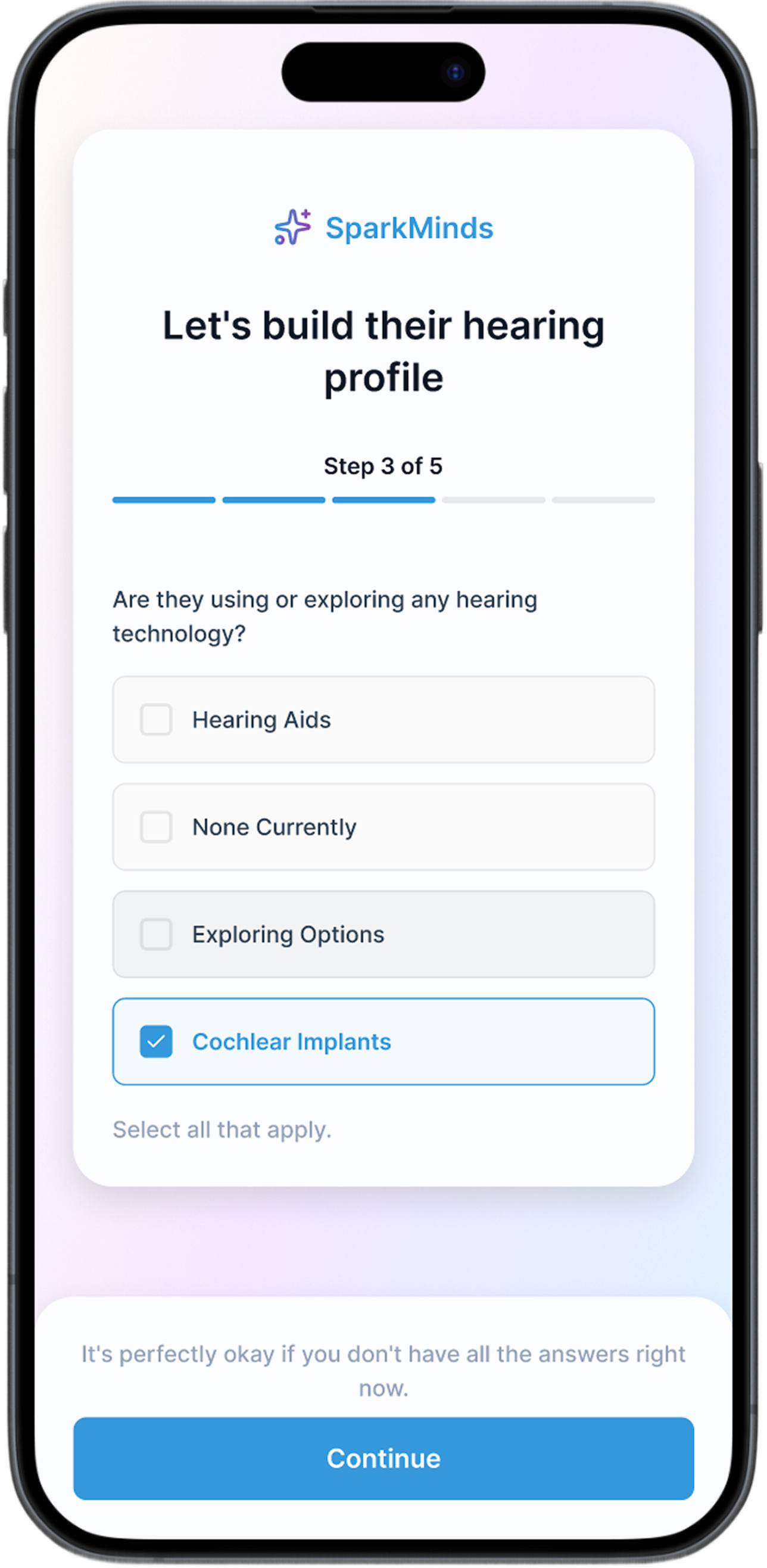
Onboarding captures hearing level and technology (e.g. hearing aids, cochlear implants) so goals and activities respect how the child accesses sound.
- 03
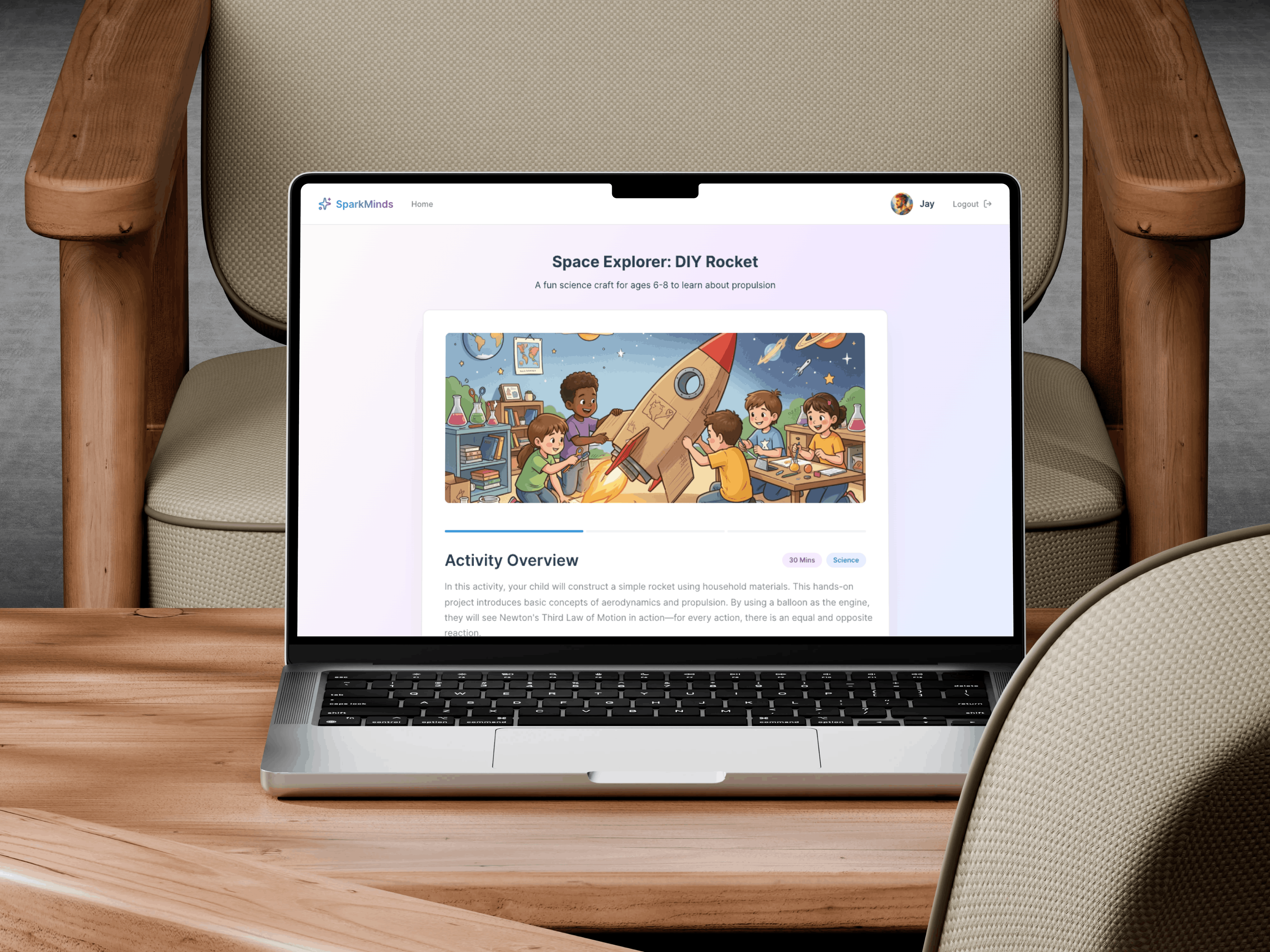
Designed and built critical flows first: onboarding, goal recommendation, daily activity with guided steps, progress tracking, and reflection — shipped incrementally on iOS, Android, and web.
- 04
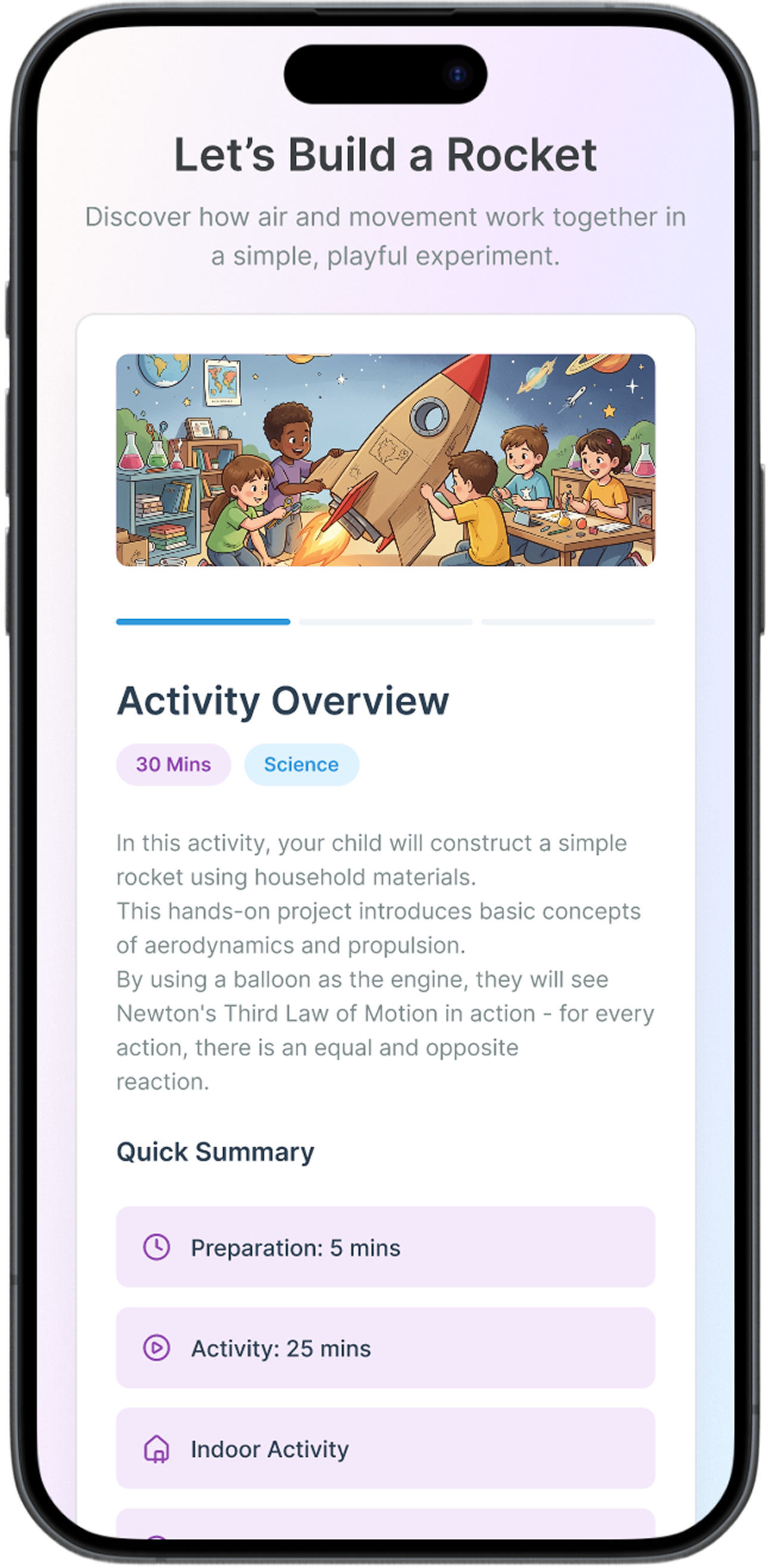
One activity per day with step-by-step guidance; depth on demand via expandable content instead of overwhelming weekly plans.
- 05
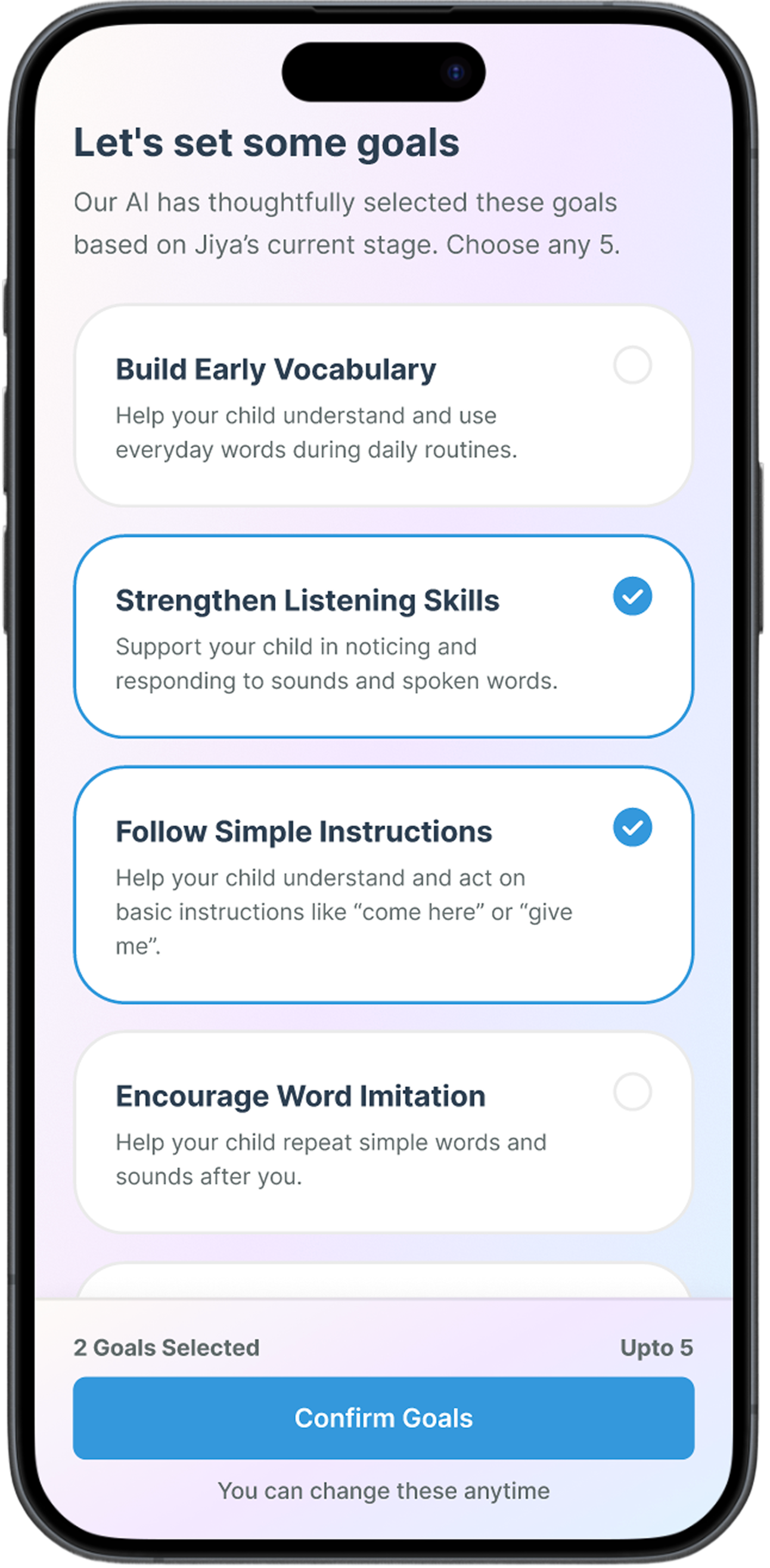
AI goal recommendations from parent input and hearing context, adaptive activities from feedback, and regenerate/adjust flows with guardrails so suggestions stay explainable and parent-controlled.
- 06
Cross-platform delivery: shared TypeScript services, Expo for mobile, web client, and a recommendation layer with structured prompts plus feedback capture for the next cycle.
- 07
Weekly concept reviews with parents of DHH children; friction traced through analytics and session notes into the next sprint.
Outcome
MVP is live on the web. Families with deaf and hard-of-hearing children are testing SparkMinds at home while the team refines hearing-aware recommendations, activity quality, and daily completion from real feedback.